
 Image 1 of 1
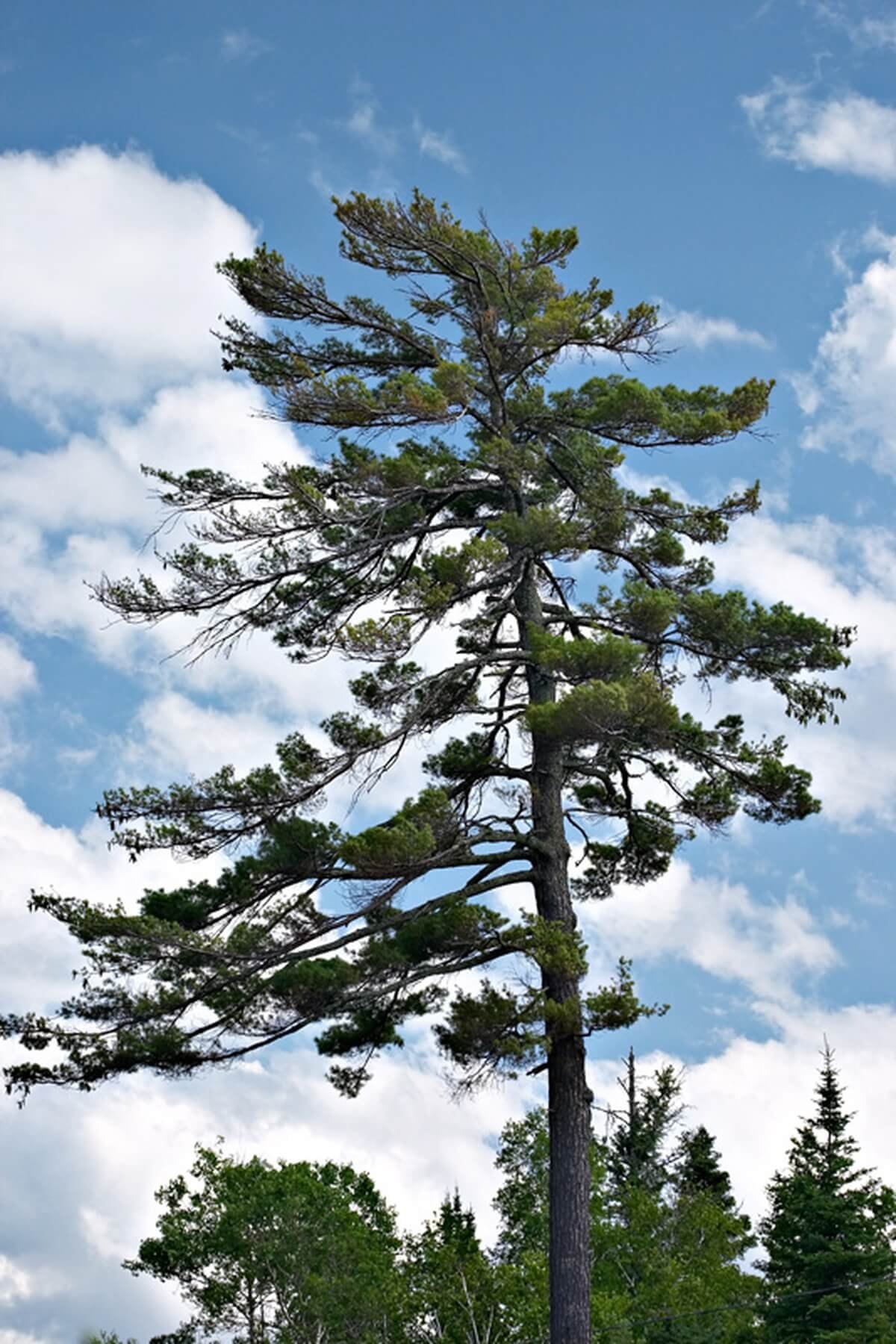
(2-3’ bare root) Pinus strobus - 75 to 100′ tall by 30-50′ wide, fast growing. Native to Vermont and our largest conifer, the Eastern white pine asha high timber value. Needles are bluish-green in fascicles (bundles) of five (rarely 3 or 4), with a deciduous sheath. Pine resin has had several uses including to waterproof baskets, pails and boats, and the sap can be processed to make turpentine. Seed or needles are eaten by squirrels, wood duck, bobwhite, pheasant, many varieties of woodpeckers, spruce grouse and turkey. Prefers sunny, moist, sandy soils, but grows well in a variety of soil types; will grow in clay soils better than most pines. Zones 3-8
(2-3’ bare root) Pinus strobus - 75 to 100′ tall by 30-50′ wide, fast growing. Native to Vermont and our largest conifer, the Eastern white pine asha high timber value. Needles are bluish-green in fascicles (bundles) of five (rarely 3 or 4), with a deciduous sheath. Pine resin has had several uses including to waterproof baskets, pails and boats, and the sap can be processed to make turpentine. Seed or needles are eaten by squirrels, wood duck, bobwhite, pheasant, many varieties of woodpeckers, spruce grouse and turkey. Prefers sunny, moist, sandy soils, but grows well in a variety of soil types; will grow in clay soils better than most pines. Zones 3-8